Begining of Rice farming Session for the year, Clearing and preparing rice field

Hello Hive
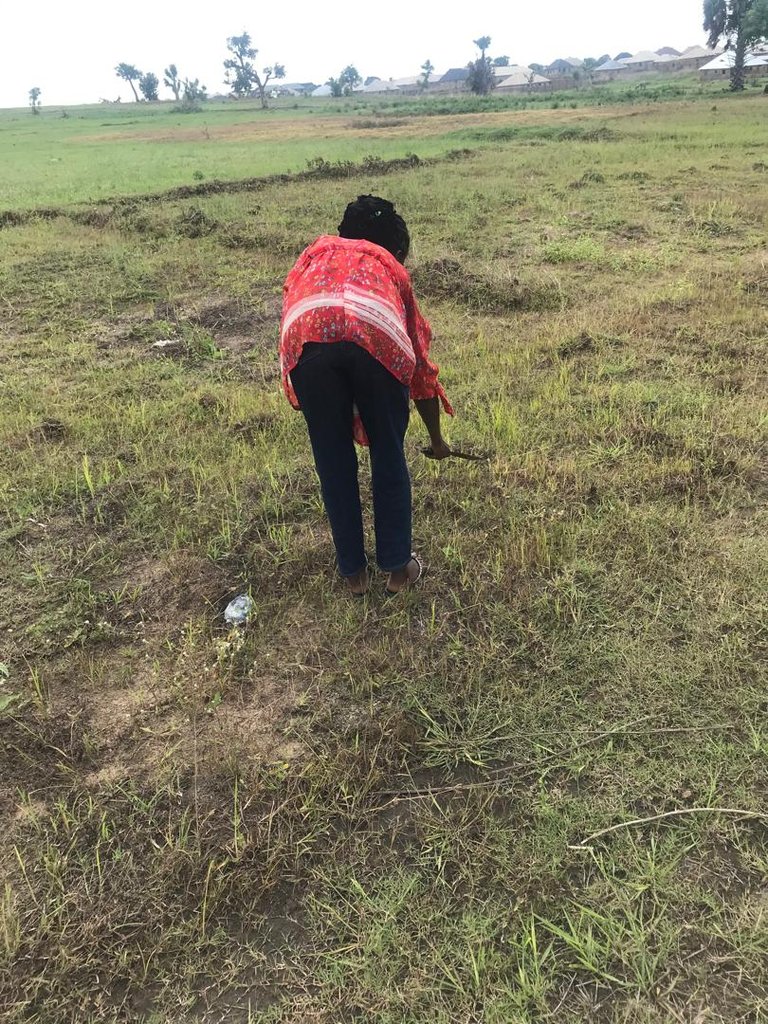
The rice farming season for this year has just commenced for myself and my family and this very portion I am standing right now is one of the portions we often grow our rice.
Rice is one of the highest and important grains to use, I can say that it is the number one major food eating in my country followed by beans.

The tuber crops we often grow need larger portions of land to produce an equivalent of what these rice grains will produce when planted on the same portion of lands and it is often more easy to preserve rice grains for years compared to our tubers, this makes it a more preferred agricultural products for planting. This is the reason why we We often plant rice in much large quantities than the tubers or any other crops.
Before now we were only able to plant rice in the swamp areas of our farmland, making it such a limitation to growing more grains when determining the available swamp land space, but now that the newer species of topland rice was introduced, we can now grow rice grains on any available fertile land space.

Today we are clearing the land in preparation for planting.
There are two basic approaches we use for planting rice.
By nursing the rice to grow into seedlings
By planting directly into the soil.
We are going to use both methods this year, and the preparation to plant some rice in the nursery is already ongoing. The pre-grown nursery rice is what we would be transplanting in the swampy areas of our farm. These portions are often covered by water from the onset of the slightest downpour, preventing us from planting the rice directly in these portions.
We cannot plant rice in portions of the farm that are covered in water, as the grains will get rotten instead of germinating; hence, it is necessary to create a nursery for the rice, grow them to a certain height, and then transplant them in those portions of the farm.

For the upland part of the rice, we are planting rice in two different methods.
Planting before weeding
Weeding before planting.
It is either we plant the grains first and then apply herbicides on the day the grains are planted, or we apply herbicides to kill the grasses first before planting the grains.
The former method is good for the grains because when we plant them in the field with low-height grasses over them like this, it often prevents sparrows and other birds from feeding on the seeds. This concealed the rice while it germinated underneath, and the applied herbicides continued to work on the grasses.

Within a week to two weeks, the grasses would have withered, and the rice grain would germinate wholly without any form of bird attack.
Since we are going to plant this portion of the rice first before applying herbicides we needed to clear of every thorn, stones, sticks, plastics or shrubs that will interfere with the growth of the planted crops
This is the perfect timing for planting the rice and we are gradually clearing and preparing our land space.
These are the two approaches we are going to use for planting our rice grains for this year.
Posted Using INLEO
Rice farming needs lots of water and it seems like you have shoratge of water.
There is shortage of water but we often manage to do some through the years.